Executive Summary
python timeit output Python In this video we will explore the Python Timeit Library, and how to use it. The timeit library is used to measure the execution time of
When developing high-performance applications, developers often need to quantify the efficiency of their algorithmsPython The Python timeit module is the industry-standard utility designed specifically for this purposepython By providing precise measurements of small code snippets, it helps engineers avoid the pitfalls of inaccurate timing methodsPYTHON
The Mechanics of the timeit Module
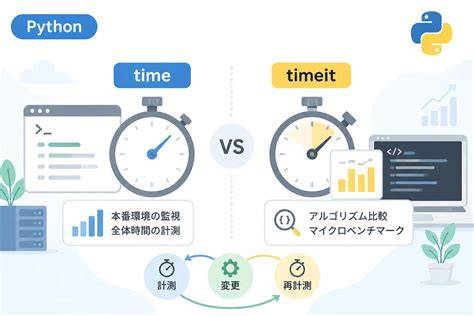
The timeit library is a robust tool within the Python standard libraryTimeit Unlike manual timing methods that use the `time` module—which can be affected by system sleep or background processes—timeit disables garbage collection and runs the code in a calibrated loop to ensure statistical significancetimeit
When you analyze the timeit results, you are typically looking at the total execution time for a specified number of repetitionstimeit results The default behavior runs the code 1,000,000 times, though this can be adjusted using the `number` parameterPYTHON
Interpreting the timeit Output
To effectively use Python Timeit, you must understand how to invoke ittimeit results The primary function `timeittimeittimeit()` requires a callable argumentPython's If you pass a string, the module compiles it into a temporary functiontimeit results
* Entity: timeitPython's IPythontimeit()
* LSI: code execution time
* Variation: measuring performance
When you execute your script, the timeit output represents the cumulative duration of all loopsPython For instance, if you see a value of 0Timeit5 seconds, it implies the total time taken for the specified number of iterationspython To find the average per loop, simply divide this figure by the `number` of iterations providedPython's IPython
Advanced Usage: IPython and Magic Commands
For those working within data science environments, Python's IPython and Jupyter Notebook offer a more streamlined experienceIPython The built-in magic command `%timeit` acts as a wrapper around the timeit modulePython
Using `%timeit` (single line) or `%%timeit` (cell-level) provides a highly readable summaryPython's It automatically calculates the best of three runs and provides the mean and standard deviationtimeit This is vital when performing benchmarking on complex functionsIPython Whether you are using PYTHON in a script or an interactive shell, mastering these tools is essential for any developer focused on code optimizationPython Timeit
Best Practices for Accurate Timing
To get the most reliable timeit results, consider the following:
1Python Setup Code: Use the `setup` parameter to import necessary modules or define variables outside the timed scopetimeit
2Python Timeit Repetitions: Always use the `-r` (repeat) flag in IPython to ensure your measurements are not skewed by transient system spikesTimeit
3Python's Consistency: Ensure the environment is stable; running heavy background tasks while measuring performance will introduce noise into your dataPython's
By integrating these techniques, you ensure that your Python code remains efficient, scalable, and performanttimeit Whether you are investigating timeit for simple list comprehensions or complex algorithm comparisons, the timeit module remains the most accurate way to validate your workPYTHON
Related Articles
Frequently Asked Questions
Here are the most common questions about python timeit output.
Leave a Comment
Share your thoughts, feedback, or additional insights on this topic.